Salado
Concrete Patio Cost in Salado, TX (2026 Guide)
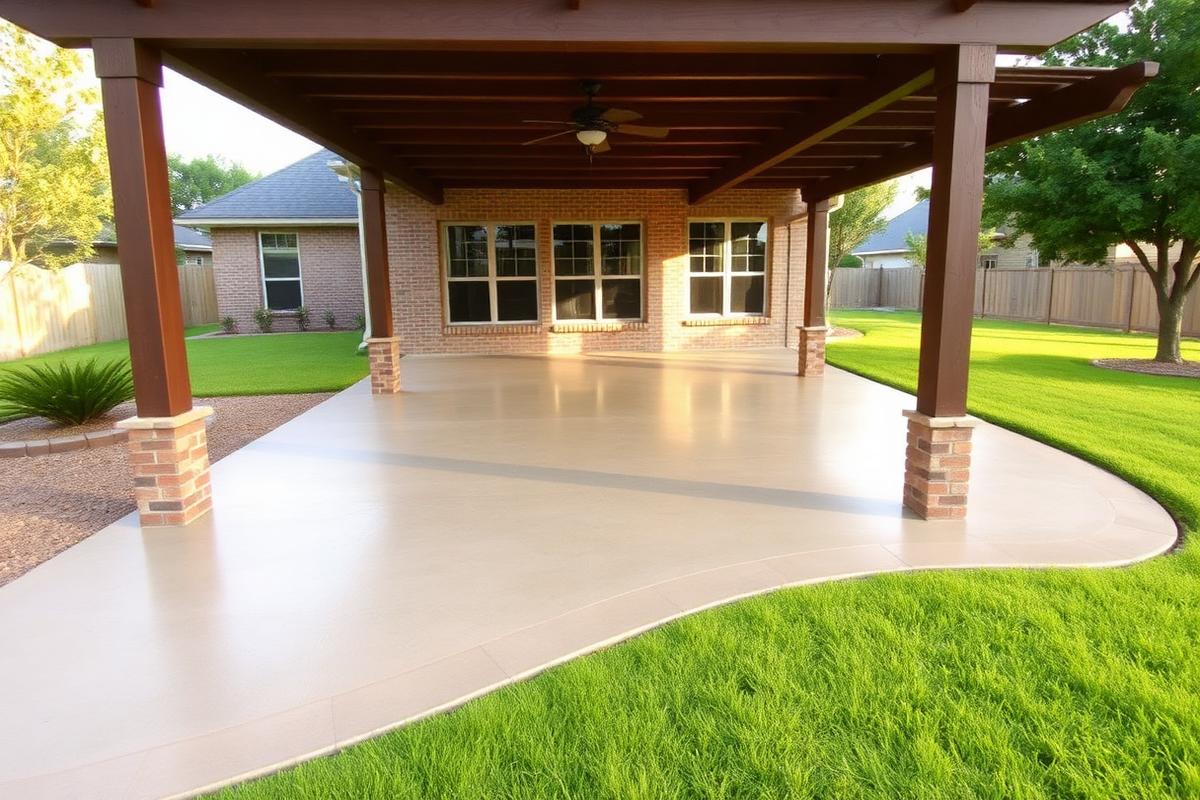
Salado backyards are made for being outside — big oaks, limestone, Salado Creek, and evenings that finally cool off this time of year. A new concrete patio is usually the piece that makes that yard usable: a place for the table, the grill, the fire pit, and the people. Here's what affects the cost, and what makes a patio last out here.
What affects the cost of a Salado patio
Every patio is priced around what it actually takes to build: how big it is, how thick it needs to be, the rebar, how much dirt work your yard needs, the finish you pick, how easy it is to get a truck to the backyard, and whether it ties into an existing slab or cover. Small patios carry a bigger share of setup, forming, and the concrete truck, so we'll walk you through that honestly.
Every project is different, so we give you a free written estimate after we see your site.
What moves the price up or down
Finish. Broom finish is the workhorse and sits at the lower end. Salt finish and exposed aggregate cost more, but they pair beautifully with the stone, cedar, and limestone so many Salado homes are built with.
Dirt work and slope. Grass, roots, and topsoil come out and a compacted base goes in. Salado lots near the creek and the bluffs can be sloped or rocky, and that takes more prep.
Cover-ready or not. If a patio cover or pergola is in your future, we pour thickened edges and set footings where the posts will go. It costs a little more now and saves you from drilling into a finished slab later.
Shape and access. Curves, steps, and seat walls add forming time. If a concrete truck can't get close to the backyard, we may need to pump, which adds cost.
Built for Salado soil and drainage
Salado sits where limestone meets clay. Some lots hit rock a few inches down; others sit on expansive clay that shrinks in a dry summer and swells when the rain comes back. That movement is what cracks a patio that was poured on a thin, uncompacted base.
We walk your lot first, then set the base prep, thickness, and rebar to match what's actually under your yard — and it all goes in writing on your estimate. We also slope every patio about 1/8"–1/4" per foot away from the house, so water heads to the yard instead of toward your foundation. That one detail prevents more headaches than anything else we do.
Why fall is a great time to pour
Summer heat is hard on fresh concrete — it dries the surface too fast and makes finishing a race. Fall in Central Texas gives us milder days that let a slab cure more evenly. Pouring now also means your patio is ready for Thanksgiving, holiday gatherings, and the first nice spring weekends instead of waiting in line when everyone calls in March.
We do keep an eye on the forecast. If a hard freeze is on the way, we'll plan the pour and curing around it.
Do you need a permit in Salado?
It depends on the project and where you live. Inside the Village of Salado, building permits run through the Village's Development Services office, and a covered patio or anything that adds a structure generally needs one. A simple open slab may follow different rules, and homes outside village limits fall under Bell County instead. We confirm what your project needs before we pour.
Ready for a backyard you'll actually use?
Get a free written estimateFAQ
Frequently Asked Questions
- How much does a concrete patio cost in Salado, TX?
- It depends on the size, thickness, rebar, finish, dirt work, site access, and whether the slab is cover-ready. Every project is different, so we give you a free written estimate after we see your site.
- What size patio should I build?
- For a table and chairs, plan on at least 12' x 14'. For seating plus a grill or outdoor kitchen, 16' x 20' and up is more comfortable. We'll stake it out on site so you can stand in it before you decide.
- What finish looks best with a stone or cedar home?
- Broom finish is clean and durable. Salt finish and exposed aggregate add texture that complements limestone and cedar, and both stay grippy when wet.
- Can you pour a patio in the fall or winter?
- Yes. Fall is one of the best times to pour in Central Texas. We watch the forecast and plan around hard freezes so the slab cures properly.
- Can you fix or resurface my old patio?
- We pour new concrete only — we don't patch, level, or resurface. If an old patio has failed, we can remove it and pour a new one in its place.