Temple
Shop Slab & Metal Building Pad Cost in Temple, TX (2026 Guide)
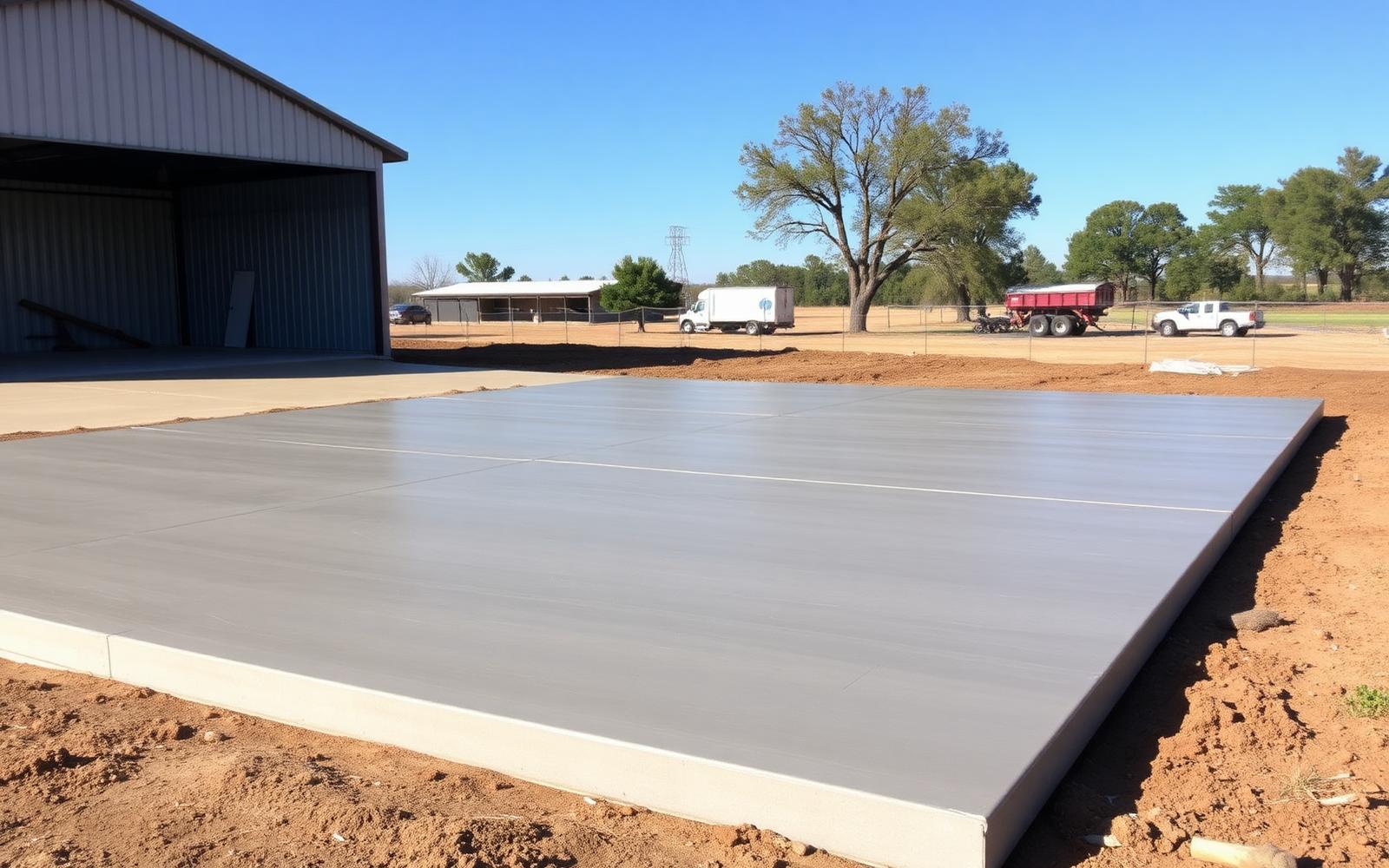
Shop slabs are one of the most requested pours we do around Temple, Belton, and the county roads in between. Metal building kits are affordable, but the pad underneath is what decides whether that building is still square and crack-free in fifteen years.
What drives the price
Square footage is only part of the number. Thickness, reinforcement, and how much dirt has to move are usually the bigger swing factors on a Temple property.
| Scope | Typical range | What's included |
|---|---|---|
| Storage / light workshop | $9–$11 / sq ft | 5" slab, #4 rebar, thickened edge, broom or trowel finish |
| Equipment or shop with lift | $11–$14 / sq ft | 6" slab, heavier rebar, deeper thickened edges |
| Building pad with heavy dirt work | $13–$16 / sq ft | Cut/fill, imported select fill, compaction testing, grade beams |
How thick should a Temple shop slab be?
Five inches with #4 rebar handles most workshops, storage buildings, and hobby garages. If you're running a two-post lift, parking a loaded trailer, or storing a tractor, go 6" or thicker with tighter rebar spacing and a thickened edge or grade beam under the building walls.
The building itself matters too. Metal building columns concentrate load at each base plate, so we size the edge detail and anchor-bolt layout around the erector's drawings rather than pouring a generic rectangle and hoping it lines up.
Houston Black clay is the real design problem
Much of Temple and Bell County sits on Houston Black clay — expansive soil that swells when it's wet and shrinks hard in an August drought. A big, flat, unreinforced slab on that soil is a crack waiting for a season change.
The fix isn't exotic: strip organics, bring the subgrade to proper moisture, compact in lifts, use select fill where needed, and reinforce for the actual load. Then saw-cut control joints on a grid that matches the bay spacing within about 24 hours of the pour so shrinkage cracks land in the joints.
Anchor bolts, aprons, and the details people forget
Set the anchor bolts to the manufacturer's template, not by eye. We use a template board so the erector shows up to a square pad with bolts in tolerance — that alone saves days on a metal building job.
Plan the apron while we're forming. A 10'–12' concrete apron in front of the overhead door keeps mud out of the shop and gives you room to work. It's dramatically cheaper poured with the slab than added a year later.
Permits in Temple
Inside Temple city limits, an accessory building and its slab generally require a permit through Building Permits & Inspections. Properties out in unincorporated Bell County follow different rules. We'll point you to the right department before we form anything, and we build the schedule around inspection timing.
Planning a shop, barn, or metal building in Temple?
Get a free written estimateFAQ
Frequently Asked Questions
- How much does a 30x40 shop slab cost in Temple, TX?
- A 30' x 40' shop pad (1,200 sq ft) typically runs about $11,000–$19,000 installed in Temple, depending on thickness, thickened edges, rebar spec, and how much dirt work the site needs.
- How thick should a shop slab be?
- Five inches with #4 rebar covers most workshops and storage buildings. Go 6" or thicker with heavier reinforcement for lifts, tractors, or loaded trailers.
- Can you pour a pad for a metal building kit?
- Yes. Send us the building drawings and anchor-bolt template and we'll form the pad, set the bolts to the template, and hand it off square and ready for the erector.
- Do I need a permit for a shop slab in Temple?
- Inside Temple city limits an accessory building and its slab generally require a permit. Unincorporated Bell County follows different rules — we'll confirm before work starts.
- How long before I can use a new shop slab?
- Foot traffic in a few days, light vehicles in about a week, and full design strength at 28 days. Steel erection timing depends on the building manufacturer's requirements.