Concrete Tips
What Is “Concrete Cancer”? What Central Texas Homeowners Should Know About ASR
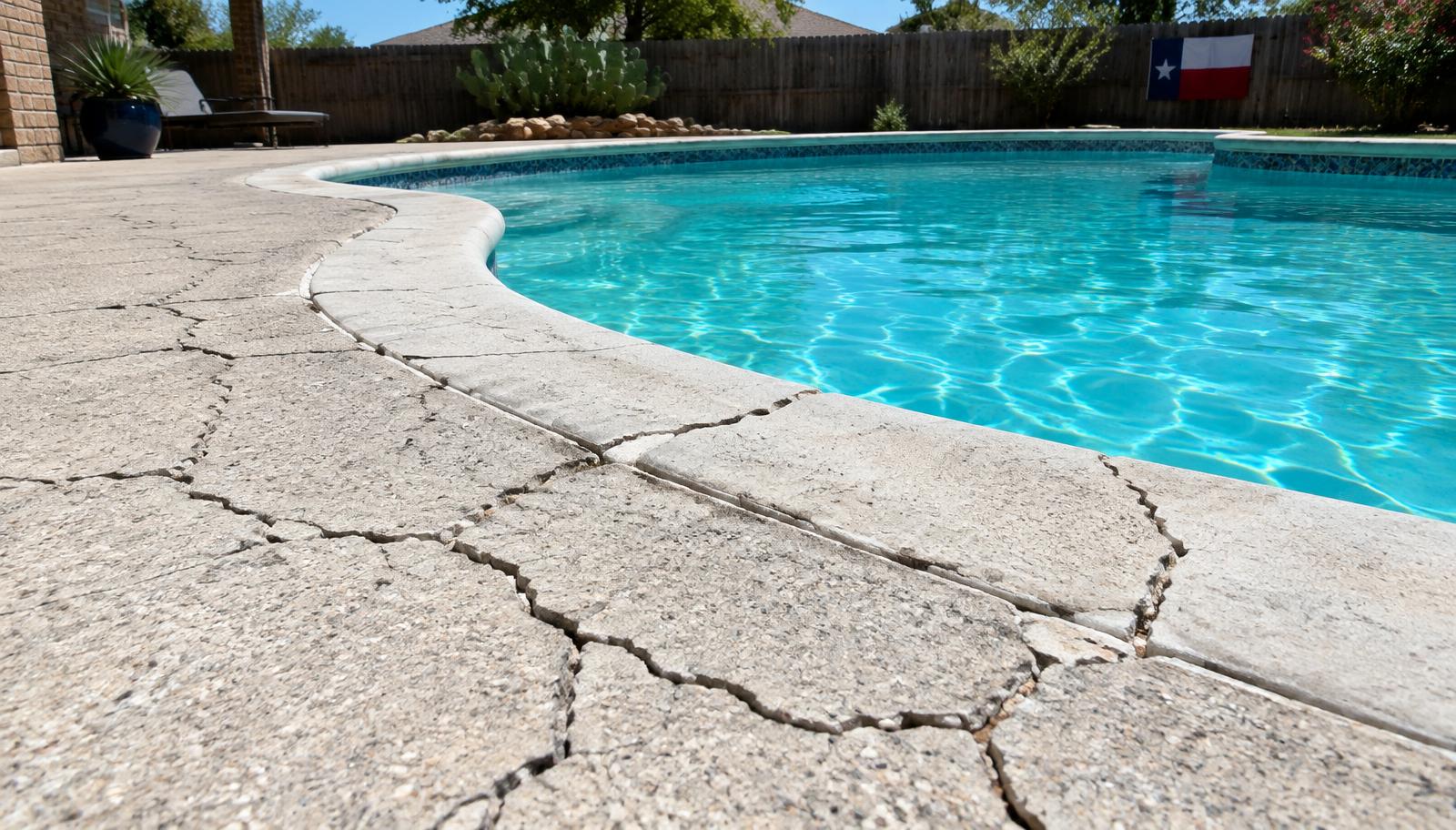
If you live in Central Texas, you may have recently heard a concerning term being used in connection with swimming pools: “concrete cancer.”
It sounds dramatic, but it refers to a very real concrete deterioration process known as Alkali-Silica Reaction, or ASR.
The issue has received significant attention in the Austin and Central Texas area, particularly because of problems discovered in swimming pools. As a Central Texas concrete company, we believe homeowners should understand what ASR is, why it happens, and why the materials used in concrete matter.
What Is Alkali-Silica Reaction?
ASR is a chemical reaction that can occur inside concrete.
For damaging ASR to develop, three primary ingredients are generally necessary:
Reactive silica + sufficient alkalis + moisture.
Certain forms of silica found within aggregate can react with alkalis in the concrete. When sufficient moisture is present, the reaction can form a gel that absorbs water and expands.
That expansion creates pressure inside the concrete itself.
Over time, that internal pressure can contribute to cracking, expansion and deterioration of the concrete.
This is why ASR is sometimes referred to as “concrete cancer.”
Why Are People Talking About It in Central Texas?
Central Texas has experienced a documented problem involving ASR in swimming pools.
Research presented through the American Society of Civil Engineers reported that more than 100 pools in and around Central Texas had been affected by ASR. The affected pools experienced varying degrees of cracking, and many eventually stopped retaining water.
The Pool & Hot Tub Alliance has also identified Austin, Texas, as one of the most notable areas in the country currently dealing with ASR in swimming pools.
Pools can be particularly vulnerable because their concrete shells remain exposed to moisture for extended periods of time.
Why Did This Become a Problem?
Concrete isn't simply “cement.”
A concrete mix contains several components, including cementitious materials, water and aggregates. The specific materials used—and how they interact with one another—can significantly affect the long-term performance of the finished concrete.
According to the Pool & Hot Tub Alliance, the Austin situation was associated with a shortage of fly ash and changes to concrete mixes during that period. Fly ash and other supplementary cementitious materials can be used as part of strategies to reduce the risk of damaging ASR.
The Federal Highway Administration identifies several established approaches for reducing ASR risk in new concrete, including using appropriately tested aggregates, controlling the alkali content of the concrete and using suitable supplementary cementitious materials.
What Does “Concrete Cancer” Look Like?
ASR-related deterioration can include cracking, expansion and other signs of distress.
That is why homeowners should be cautious about diagnosing “concrete cancer” based on a photograph, social-media post or crack pattern alone.
Can ASR Be Prevented?
The concrete industry has established methods designed to significantly reduce the risk of damaging ASR in new concrete.
Depending on the application and materials involved, those strategies can include testing and selecting appropriate aggregates, managing the alkali content of the concrete and incorporating appropriate supplementary cementitious materials.
There isn't one universal concrete mix that is appropriate for every application.
Good concrete starts with understanding what is being built, where it is being built, the environment it will be exposed to and the materials being used.
What Should Central Texas Homeowners Know?
The purpose of discussing “concrete cancer” isn't to make homeowners afraid of concrete—or swimming pools.
It's to educate.
ASR has existed in the concrete industry for decades. What makes the Central Texas situation noteworthy is the concentration of reported problems, particularly involving swimming pools in and around Austin.
For homeowners planning future concrete projects, it's another reminder that the quality of concrete construction involves much more than what the finished surface looks like.
The materials, mix design, preparation, placement and workmanship all matter.
Federal Highway Administration
Federal guidance on identifying and reducing Alkali-Silica Reaction in concrete.
Pool & Hot Tub Alliance
Industry information on ASR in swimming pool structures, including the Austin-area situation.
Our Goal Is Education, Not Diagnosis
At Firm Foundations Concrete, we believe informed homeowners make better decisions.
We are sharing information about ASR because it is an important concrete issue affecting our region and because Central Texas homeowners deserve to understand what they're hearing when the term “concrete cancer” comes up.
Firm Foundations Concrete does not diagnose, test for, or treat Alkali-Silica Reaction.
If you are concerned that an existing pool or concrete structure may have ASR, we recommend consulting an appropriately qualified engineer, concrete materials specialist or testing laboratory for an evaluation.
Our goal is simple: to help Central Texans better understand the concrete beneath their homes, businesses and outdoor spaces.
FAQ
Frequently Asked Questions
- What is “concrete cancer”?
- “Concrete cancer” is a common nickname for Alkali-Silica Reaction (ASR), a chemical reaction inside concrete between reactive silica in the aggregate, alkalis, and moisture. The reaction forms an expanding gel that creates internal pressure, which can lead to cracking and deterioration over time.
- Why is ASR a problem in Central Texas?
- Research presented through the American Society of Civil Engineers reported that more than 100 swimming pools in and around Central Texas were affected by ASR, and the Pool & Hot Tub Alliance has identified Austin as one of the most notable ASR areas in the country. Pools are especially vulnerable because their concrete shells stay exposed to moisture for long periods.
- Does a crack in my concrete mean I have ASR?
- No. Concrete can crack for many reasons, including shrinkage, settlement, movement, installation issues, and environmental conditions. Determining whether ASR is present requires evaluation and specialized testing by qualified professionals—don't diagnose it from a photo or crack pattern alone.
- Can ASR be prevented in new concrete?
- The industry has established ways to reduce ASR risk, including testing and selecting appropriate aggregates, controlling alkali content, and using suitable supplementary cementitious materials such as fly ash. There is no one-size-fits-all mix—good concrete starts with matching the materials to the project and its environment.
- Does Firm Foundations Concrete repair ASR damage?
- No. We do not diagnose, test for, or treat Alkali-Silica Reaction. If you suspect ASR in an existing pool or structure, we recommend consulting a qualified engineer, concrete materials specialist, or testing laboratory. Our focus is building new concrete—driveways, patios, slabs, and foundations—the right way from the start.